


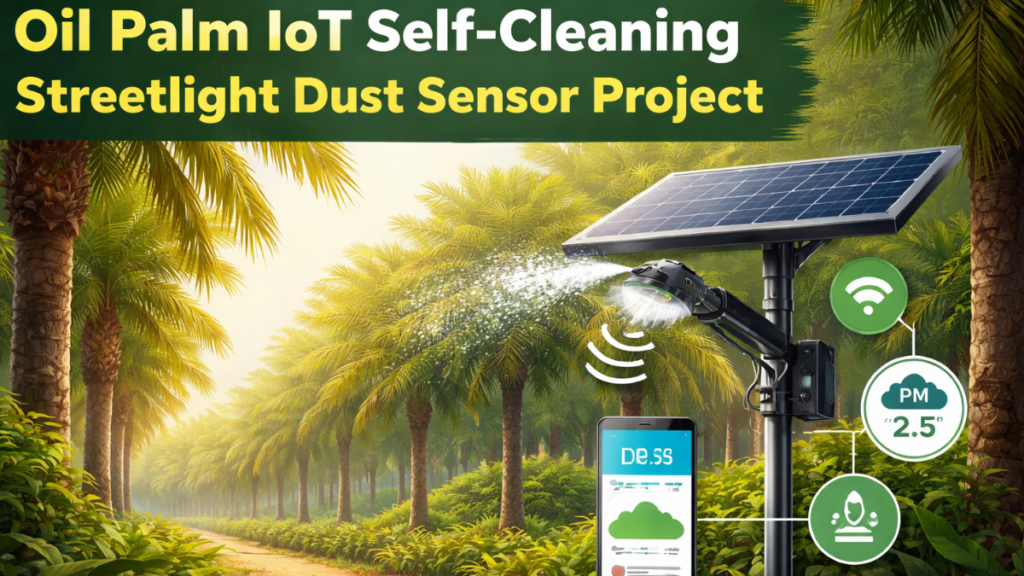
In recent years, advancements in technology have revolutionized the way cities approach urban infrastructure, with smart systems becoming an essential part of the modern urban landscape. One of the most exciting innovations in this domain is the Oil Palm IoT Self-Cleaning Streetlight Dust Sensor Project, a groundbreaking initiative that combines sustainability, technology, and efficiency to enhance urban living.
The Rise of IoT in Urban Infrastructure
The Internet of Things (IoT) has opened up new possibilities for improving everyday life, particularly in urban environments. IoT devices are now commonly used in various sectors, including transportation, healthcare, and even public lighting. These devices collect and transmit data to help optimize operations and improve the quality of life for city dwellers. One of the most impressive applications of IoT technology is its integration into street lighting systems, which play a crucial role in maintaining safety and security in cities worldwide.
What is the Oil Palm IoT Self-Cleaning Streetlight Dust Sensor Project?
The Oil Palm IoT Self-Cleaning Streetlight Dust Sensor Project is a forward-thinking initiative designed to address the growing concern of pollution in urban areas. Specifically, it combines the power of IoT with sustainable solutions to create streetlights that not only provide illumination but also maintain themselves by cleaning the dust that accumulates on solar panels and other sensitive components. This ensures that the streetlights remain fully operational without the need for frequent maintenance or manual cleaning.
The integration of the oil palm-derived components into the self-cleaning mechanism adds an eco-friendly aspect to the project. Oil palm, a resource known for its versatility and efficiency, serves as a sustainable alternative in the development of self-cleaning technology. By incorporating this material into the streetlight design, the project aims to reduce the environmental impact associated with traditional streetlight maintenance while simultaneously promoting the use of renewable resources.
How Does It Work?
At the heart of this innovative streetlight system is a dust sensor that can detect the buildup of dust and dirt on the solar panels. Once the dust level reaches a certain threshold, the system activates a self-cleaning mechanism powered by the solar energy harnessed by the streetlight. The cleaning process uses eco-friendly materials derived from oil palm, ensuring a sustainable and effective solution for urban maintenance.
Additionally, the IoT enabled dust sensors continuously monitor the condition of the solar panels, ensuring that the streetlights are operating at optimal efficiency. The data collected from these sensors can be transmitted to a central control system, allowing city planners and municipal authorities to track the performance of the streetlights and address any issues before they become significant problems.
Key Benefits of the Project
1. Sustainability and Eco-Friendliness
The Oil Palm IoT Self Cleaning Streetlight Dust Sensor Project is built on the principle of sustainability. The use of renewable materials like oil palm not only reduces the carbon footprint of urban infrastructure but also helps cities become more eco-friendly. The self-cleaning mechanism reduces the need for manual maintenance, which can often involve the use of harmful chemicals or non-sustainable materials.
2. Reduced Maintenance Costs
Traditional streetlight systems require regular maintenance to ensure that the solar panels are free from dirt and debris, which can obstruct sunlight and reduce the efficiency of the system. With the self-cleaning mechanism, cities can significantly reduce the costs associated with manual cleaning and maintenance. This makes the project a cost-effective solution for urban infrastructure management.
3. Increased Efficiency
With the integration of IoT sensors, these streetlights are able to operate at their maximum potential. The ability to detect dust buildup and clean it automatically ensures that the streetlights are consistently performing at a high level. This increased efficiency contributes to better illumination in urban spaces, enhancing safety and security during the night.
4. Data Driven Urban Planning
The IoT system collects valuable data regarding the streetlight’s performance and environmental conditions. This data can be used by city planners to make informed decisions about urban development, including the placement of streetlights and the optimization of energy consumption. This level of data-driven decision-making helps cities become smarter and more efficient.
The Future of Smart City Infrastructure
The Oil Palm IoT Self Cleaning Streetlight Dust Sensor Project represents just one example of how technology can be used to improve urban infrastructure. As cities continue to grow, the need for sustainable and efficient solutions will become even more pressing. Projects like this pave the way for a future where urban areas are not only smarter but also more environmentally conscious.
In the future, it is likely that we will see more integrations of IoT into various aspects of urban life, from smart traffic systems to advanced waste management solutions. The success of the Oil Palm IoT Self-Cleaning Streetlight Dust Sensor Project is a testament to the power of combining cutting-edge technology with sustainability in addressing the challenges faced by modern cities.
Conclusion
In conclusion, the Oil Palm IoT Self Cleaning Streetlight Dust Sensor Project is a perfect example of how innovation can bring about positive change in urban infrastructure. By integrating IoT technology, sustainable materials, and efficient systems, this project offers a smart and eco-friendly solution to urban lighting challenges. As cities continue to develop, such projects will play a pivotal role in shaping the future of urban living where technology, sustainability, and efficiency coexist harmoniously.
for more information click here
