


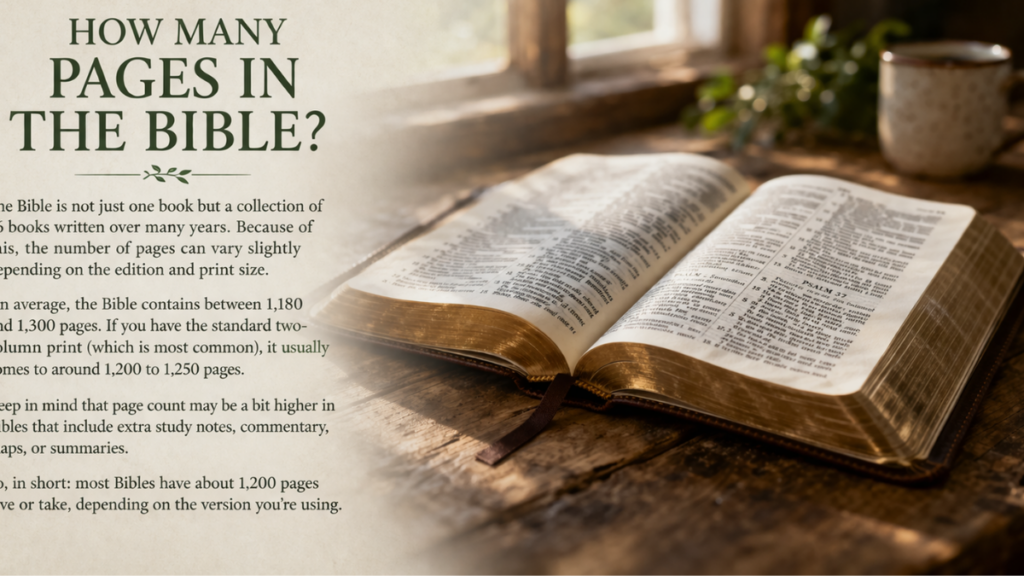
The Bible is one of the most widely read and influential books in history. Whether you are a believer, a scholar, or someone with a deep interest in the world’s most published book, you may wonder how many pages the Bible actually contains. While the number of pages can vary depending on the edition, translation, and formatting, this article will provide an overview of the average number of pages in the Bible and the factors that influence its length.
The Average Length of the Bible
On average, the Bible contains around 1,000 to 1,500 pages. This number can fluctuate based on several factors, including the size of the text, the inclusion of supplementary material, and whether it’s a study Bible or a standard edition. The Bible is divided into two main sections: the Old Testament and the New Testament. Together, these sections make up a book that is vast in terms of both its content and its structure.
The Old Testament and the New Testament: A Breakdown
- Old Testament: The Old Testament is the first and longer portion of the Bible, containing 39 books. It spans a variety of genres, including history, law, prophecy, and poetry. The Old Testament is often the largest section in terms of pages, especially in Christian versions, though some may vary based on the specific translation used.
- New Testament: The New Testament consists of 27 books, focusing on the life, teachings, death, and resurrection of Jesus Christ, as well as early Christian history and letters written by apostles. It is typically shorter than the Old Testament in terms of page length, but it is rich in theological concepts and teachings.
Key Factors That Affect the Number of Pages
Several factors contribute to the difference in page count across various versions of the Bible. Here are a few of the most important ones:
1. Translation:
The Bible has been translated into numerous languages, and different translations may have varying page counts. For example, the King James Version (KJV) often has a different page count than the New International Version (NIV), due to differences in language style and the inclusion or exclusion of certain texts.
2. Print Size:
The print size is a significant factor in the length of a Bible. Larger print editions can have a considerably higher page count than standard or small print versions. A large print Bible may add an extra 100 to 300 pages compared to its standard print counterpart.
3. Study Bibles:
Many Bibles include extra material such as study notes, commentaries, maps, and cross-references. These editions can add hundreds of pages to the original text. A study Bible may be over 2,000 pages long, as it contains additional resources to help readers understand the context and meaning of the scriptures.
4. Size and Format:
Bibles come in a variety of formats, from pocket-sized editions to large, family style Bibles. A pocket-sized Bible will have smaller text and possibly thinner pages, leading to a shorter page count. Conversely, a large family Bible might have larger print and more illustrations, resulting in a greater page count.
Does the Number of Pages Matter?
While the page count is often a curiosity for many readers, it is not the most important aspect of the Bible. The true value of the Bible lies in its content its messages, teachings, and the wisdom it has offered to generations. Whether you’re reading a Bible with 1,000 pages or 2,000 pages, the core purpose remains the same: to provide spiritual guidance, historical context, and theological insights.
Conclusion
To answer the question “How many pages in the Bible?”, it generally falls within the range of 1,000 to 1,500 pages, though this number can vary depending on the translation, print size, and additional content. The number of pages does not diminish the Bible’s significance; rather, it’s the message within that truly matters. Whether you’re reading for religious study, personal growth, or scholarly research, the Bible remains one of the most impactful texts in human history.
for more information click here
