


Introduction
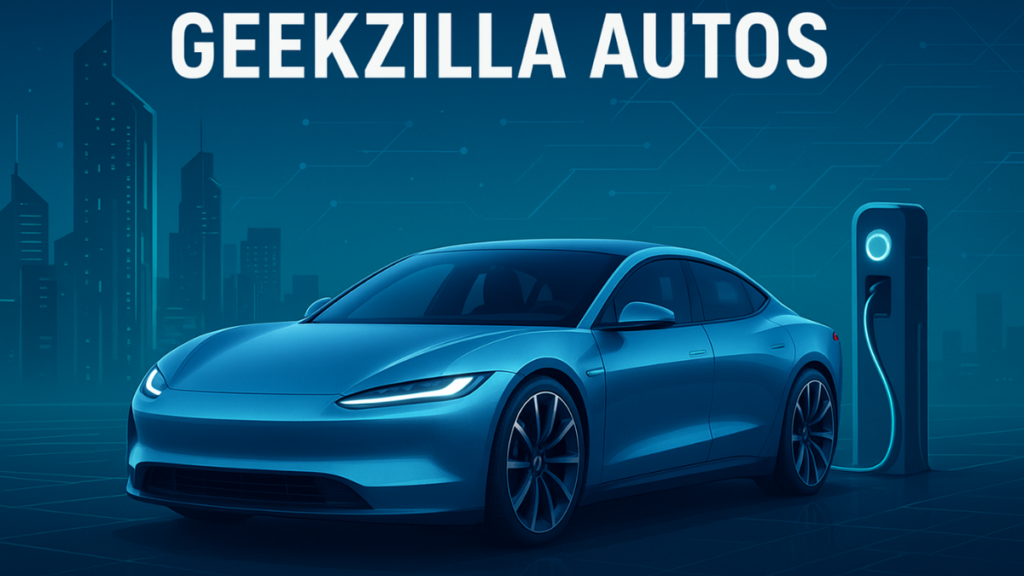
In an era defined by rapid technological change and rising environmental awareness, the automotive industry stands at a critical crossroads. Consumers expect more than simple mechanical reliability they demand smarter, safer, more sustainable mobility. Enter the concept of Geekzilla Autos: a forward‑looking (hypothetical or conceptual) automotive innovator poised to reshape how we think about cars, driving, and the future of mobility. This article examines how Geekzilla Autos through cutting edge technologies, sustainable engineering, and visionary design could spearhead a new generation of vehicles that blend performance, eco‑friendliness, and smart connectivity.
By exploring the latest global automotive innovations and imagining how Geekzilla Autos might integrate them, we paint a picture of a bold future one where cars are not just vehicles, but mobility platforms.
The Context: Why Automotive Innovation Matters Today
The automotive world is undergoing a dramatic transformation. Factors such as climate change, urban congestion, evolving consumer expectations, and advances in artificial intelligence (AI) and connectivity are reshaping what vehicles are and what they can do. As discussed in recent industry analyses, some of the major trends reshaping mobility include:
-
The rise of electric vehicles (EVs) and hybrid models as regulators and consumers push for lower emissions.
-
Integration of autonomous driving systems and advanced driver‑assistance systems (ADAS), leveraging AI, LiDAR, radar, and sensors to improve safety and convenience.
-
Connected‑car technologies: vehicles that communicate with infrastructure, other vehicles, and the cloud (so-called V2X vehicle‑to‑everything), enabling smarter traffic management, predictive maintenance, and real‑time updates.
-
Sustainable manufacturing: more eco‑friendly materials, energy‑efficient factories, and emphasis on reducing the environmental footprint of both manufacturing and vehicle use.
-
The rise of software‑defined vehicles, where vehicle capabilities are increasingly determined by software over‑the‑air updates, AI‑powered features, customizable in‑car experiences.
In this dynamic environment, a company like Geekzilla Autos built around innovation, sustainability, and smart design could lead the next evolutionary leap.
What Geekzilla Autos Could Stand For Mission, Vision & Core Values
If Geekzilla Autos were a real automaker or design house, its foundation might rest on the following guiding principles:
-
Innovation‑First Design: Embracing latest advances EV powertrains, autonomous-driving hardware and software, connected-car tech, and modular vehicle architectures.
-
Sustainability & Environmental Responsibility: Prioritizing low-emission propulsion (electric/hybrid), eco‑friendly materials, and sustainable manufacturing and lifecycle thinking.
-
Smart Connectivity & User‑Centric Experience: Building cars that are not just transport tools but intelligent platforms integrating IoT, AI, predictive maintenance, personalized in‑cabin experiences, and seamless connectivity.
-
Safety & Reliability: Leveraging advanced sensors, AI, driver‑assistance and self‑driving capabilities, while focusing on real-world safety standards.
-
Future‑Ready Mobility Vision: Preparing for a world where mobility is about more than owning a car but about shared mobility, modular vehicles, adaptability, and evolving transportation ecosystems.
With this vision, Geekzilla Autos would not just build cars it would build the bridges between traditional automotive engineering and next‑generation mobility.
Core Pillars of Innovation
Electric & Hybrid Powertrains
Central to any forward-looking automotive company today is the shift from internal combustion engines (ICE) to electric or hybrid propulsion. For Geekzilla Autos, this would likely be a foundational pillar. By developing efficient battery-electric vehicles (BEVs) and plug-in hybrids, the company would address pressing environmental and regulatory pressures, while offering customers performance, lower running costs, and reduced emissions.
Beyond just propulsion, such a company might invest in fast-charging technologies, efficient battery management, and perhaps explore partnerships to build EV charging infrastructure or battery‑recycling capabilities. This aligns with global automotive trends pushing EV dominance.
Autonomous Driving & Advanced Driver Assistance
One of the most transformative developments in modern automotive technology is the evolution of autonomous driving and ADAS (Advanced Driver‑Assistance Systems). Companies worldwide now deploy sensor suites combining cameras, LiDAR, radar along with AI and machine‑learning algorithms to interpret environments and assist (or eventually take over) driving tasks.
For Geekzilla Autos, embedding such systems could mean offering vehicles capable of semi-autonomous driving (e.g. adaptive cruise control, lane keeping, collision avoidance) now with a roadmap toward more advanced autonomy (e.g. full self‑driving) as regulations, infrastructure, and technology mature.
In addition, by tapping into the latest AI research (such as generative AI or advanced learning algorithms), Geekzilla Autos could contribute to more intelligent perception, better predictive safety, and improved human‑machine interaction inside the vehicle.
Connected Cars & Smart Mobility Infrastructure
Cars are no longer isolated mechanical objects they’re becoming nodes on the broader mobility and data network. Through connectivity, cars can communicate with other vehicles, infrastructure, traffic systems, and even smartphones or homes. This Vehicle‑to‑Everything (V2X) communication promises improvements in safety, congestion management, traffic flow, and driver convenience.
Geekzilla Autos could leverage this by building vehicles with integrated 5G/6G (or region‑appropriate connectivity), embedded IoT, real-time diagnostics and monitoring, predictive maintenance alerts, and seamless integration with users’ digital lives and smart devices.
Moreover, as cities evolve and smart city infrastructure grows, such vehicles could become part of larger mobility ecosystems cooperating with traffic management, ride‑sharing, urban planning, and more supporting more efficient, eco‑friendly urban mobility.
Sustainable Manufacturing & Eco Conscious Design
The future of automotive isn’t just about what’s under the hood but how the car is built, maintained, and recycled. The push for sustainability in manufacturing from energy efficient production, use of recycled or renewable materials, to minimizing carbon footprint in the supply chain is increasingly important.
A forward‑looking automaker like Geekzilla Autos might adopt such practices: using recycled or bio‑based materials for interiors and exteriors, optimizing manufacturing energy use, designing for modularity (e.g. easier parts replacement, upgrades), and thinking about end-of-life vehicle recycling or remanufacturing.
Such a sustainable manufacturing approach would resonate with environmentally conscious consumers a growing segment worldwide and align with global regulatory and societal trends.
AI Powered User Experience & Vehicle Intelligence
Beyond propulsion, autonomy, and sustainability, one of the most exciting frontiers in automotive innovation is the in‑car user experience: a shift from cars as tools to cars as intelligent, adaptive platforms. AI and machine learning now enable features such as personalized settings (seat, climate, infotainment), voice‑activated assistants, predictive maintenance alerts, and adaptive driving aids.
For Geekzilla Autos, embedding generative AI, adaptive user‑interfaces, or even AI‑driven in‑car assistants could create a deeply personalized driving experience. Vehicles could learn driver habits, adjust settings dynamically, warn of maintenance needs before breakdowns, provide route optimization for fuel or battery efficiency, and evolve via software updates much like smart devices.
Such vehicles would not simply transport you they’d learn from you, adapt to you, and grow smarter over time.
The Broader Impact: How Geekzilla Autos Could Influence the Industry
Accelerating Industry Innovation
If a company like Geekzilla Autos demonstrated a successful model combining EVs, autonomy, connectivity, sustainability, and AI, it could push entire industry players to raise their standards — accelerating innovation across the board.
Competitors might be forced to innovate faster, prioritize sustainability, or invest more in software-defined vehicle (SDV) platforms. This could lead to a wave of smarter, greener cars, and an era where outdated ICE vehicles become marginal.
Redefining Ownership & Mobility Concepts
With connectivity, modular design, and smart features, vehicles by Geekzilla Autos could shift consumer thinking away from “buy a car and own it” toward “mobility as a service” or “mobility as a platform.” Cars might be leased, shared, upgraded, or maintained via subscription much like smartphones or software. This could reshape urban mobility, reduce the environmental footprint, and make mobility more accessible.
Paving the Way for Smart Cities & Integrated Transport Ecosystems
Smart, connected, autonomous vehicles can integrate with broader infrastructure traffic systems, public transport, ride‑hailing, urban planning enabling smoother traffic flow, reduced congestion, fewer accidents, and lower emissions. Geekzilla Autos, with its focus on connectivity and sustainability, could help cities transition toward integrated mobility solutions contributing to smarter, greener urban life.
Enhancing Safety & Reducing Environmental Impact
Through autonomous driving and connectivity, vehicles could significantly reduce accidents caused by human error. Technology driven safety systems sensors, AI, predictive analytics could anticipate hazards faster than human drivers. Meanwhile, EV and hybrid propulsion directly reduce tailpipe emissions, and sustainable manufacturing reduces overall environmental footprint.
Coupled together, these innovations could deliver safer, cleaner, and more efficient mobility for societies worldwide.
Challenges and Considerations
Of course, such a vision isn’t without hurdles. For a company like Geekzilla Autos to succeed and for the larger industry to follow several challenges must be addressed:
-
Technological Complexity: Integrating EV powertrains, autonomy hardware, AI systems, connectivity, and sustainable materials all in one vehicle is complex, expensive, and requires constant R&D.
-
Regulatory & Infrastructure Limitations: Many regions lack charging infrastructure, laws around autonomous driving and liability remain murky, and connectivity standards vary widely.
-
Consumer Acceptance & Trust: Drivers accustomed to traditional cars may resist high‑tech vehicles, especially autonomous driving; building trust in AI, data security, and reliability is critical.
-
Cost & Affordability: High tech vehicles often come at premium prices; balancing cutting-edge features with affordability will be essential for mass adoption.
-
Environmental Costs Across Lifecycle: While EVs reduce tailpipe emissions, battery production, resource extraction, and manufacturing processes still carry environmental costs sustainable practices must cover the full lifecycle.
Addressing these will require not only technical innovation, but also collaboration across policymakers, infrastructure providers, urban planners, and consumers.
Looking Ahead The Future Vision of Geekzilla Autos
Imagine a near-future where a family in 2030 steps into a car built by Geekzilla Autos. The vehicle is fully electric, auto‑adjusts itself to the driver’s preferences, syncs with their smart home, communicates with city traffic infrastructure to choose the least congested route, warns them in advance of maintenance needs, and — with a press of a button switches to semi-autonomous mode for part of the journey.
Alternatively, imagine mobility services where vehicles are shared, upgraded, or customized on demand, reducing urban congestion, minimizing emissions, and making mobility more accessible to a wider audience.
In such a world, cars are not just machines they are intelligent, adaptive partners in daily life. And companies like Geekzilla Autos could lead that transition.
If the industry embraces this blend of electrification, autonomy, connectivity, sustainability, and AI we may soon look back at traditional internal‑combustion cars as relics of a bygone era.
Frequently Asked Questions (FAQ)
Q: What kind of vehicles would Geekzilla Autos produce only electric, or hybrid as well?
A: Ideally both. To match global trends and environmental goals, Geekzilla Autos would prioritize all-electric vehicles (EVs), but may also offer hybrid models for markets where EV infrastructure is still developing. This approach offers flexibility and broader accessibility.
Q: Will Geekzilla Autos’ cars be fully autonomous?
A: The initial models might offer advanced driver‑assist and semi‑autonomous features (like lane‑keeping, adaptive cruise, collision avoidance), while future iterations aim for higher levels of autonomy as sensors, AI, and regulations mature. Full autonomy remains a long‑term goal.
Q: How does connectivity benefit drivers beyond just being “smart”?
A: Connectivity enables features such as predictive maintenance alerts, over‑the‑air software updates, real‑time traffic and infrastructure communication, remote diagnostics, integration with smart homes/devices, and improved safety via V2X (vehicle‑to-everything) communication.
Q: Isn’t all this technology expensive? How can average consumers afford such cars?
A: Initially, high-end models might be expensive. But over time, as manufacturing scales, battery costs drop, and software-driven features become common, the price could come down. Additionally, business models like vehicle subscription, leasing, or mobility-as-a-service could make such advanced cars more accessible.
Q: What environmental impact does Geekzilla Autos aim to reduce, beyond tailpipe emissions?
A: Apart from zero/low-emission propulsion, the company would focus on sustainable manufacturing, use of eco-friendly or recycled materials, energy‑efficient production facilities, and designing vehicles for easier recycling or modular upgrades reducing the overall ecological footprint over the vehicle lifecycle.
Q: What are the biggest challenges Geekzilla Autos might face?
A: Key challenges include technological complexity and cost, regulatory and infrastructure limitations (especially in regions lacking charging or smart‑road infrastructure), consumer acceptance of autonomous and AI‑driven vehicles, data security and privacy concerns, and ensuring that manufacturing & lifecycle sustainability is genuinely realized.
Conclusion
The future of mobility is evolving from traditional combustion‑engine cars to intelligent, connected, sustainable, and adaptive vehicles. A company like Geekzilla Autos, by embracing the full spectrum of innovation from electric powertrains and AI‑driven autonomy to connected smart‑car platforms and sustainable manufacturing could define that future.
By rethinking not just how cars move, but how they live in our daily lives, integrate with infrastructure, adapt to users, and build toward a more sustainable world, Geekzilla Autos embodies a bold vision: mobility reimagined.
for more information click here
